
Before the first trench is dug. Before heavy equipment rolls in. Before materials are delivered. There’s one decision that quietly determines how protected, compliant, and professional your project will look from day one: construction site fencing.
A lot of contractors think fencing is just about putting up barriers. But in reality, it’s about risk management, liability protection, operational flow, and even brand reputation. Let’s break down why fencing should never be an afterthought.
Fencing Sets the Tone Before Work Even Begins
The moment a project breaks ground, it becomes a magnet for attention. Curious pedestrians. Nearby residents. Vendors. Trespassers. Sometimes even thieves.
Without clear perimeter definition, your site is exposed.
Strategic temporary fencing solutions create immediate structure. They define boundaries before materials, tools, and equipment arrive. That early setup protects assets and prevents avoidable issues before they escalate.
It’s not just about keeping people out—it’s about establishing control from day one.
Liability Starts at the Perimeter
Here’s something contractors don’t talk about enough: liability begins at the property line.
If someone wanders onto an unsecured site and gets injured, the consequences can be significant. Even if you’re not technically at fault, investigations, paperwork, and legal complications cost time and money.
That’s why proper jobsite access control isn’t optional. It shows intent. It shows responsibility. It shows that you’ve taken reasonable steps to prevent unauthorized entry.
Controlled entry points reduce:
- Accidental injuries
- Insurance claims
- Vandalism incidents
- Equipment theft
- Legal exposure
And in construction, reducing risk is always cheaper than dealing with it later.
Security Is More Than Cameras
When people think of construction site security, they usually picture cameras or overnight guards. But your first layer of defense isn’t electronic—it’s physical.
Perimeter fencing creates a psychological barrier as much as a physical one. It sends a message: this area is controlled.
Sites without visible fencing are far more likely to experience:
- After-hours trespassing
- Material theft
- Graffiti or vandalism
- Unauthorized dumping
Security systems are important, but they work best when combined with strong physical boundaries.
Safety Compliance Isn’t Just Internal
Most contractors focus on safety inside the work zone—hard hats, fall protection, signage. But OSHA site safety compliance also involves protecting the public.
Construction areas contain hazards:
- Open trenches
- Exposed wiring
- Heavy machinery
- Elevated platforms
- Sharp materials
Proper fencing reduces the risk of non-workers entering dangerous zones. It helps demonstrate that you’re taking proactive safety measures—not just reacting when issues arise.
And inspections go a lot smoother when your site is clearly defined and secured.
Perimeter Planning Is Operational Planning
Fencing isn’t just about security—it’s about flow.
Well-designed perimeter control construction allows you to:
- Define entry and exit points
- Separate pedestrian and vehicle access
- Control delivery zones
- Create staging areas
- Establish emergency pathways
When perimeter layout is intentional, daily operations become more efficient. Crews know where to enter. Deliveries know where to unload. Visitors know where to check in.
Clarity eliminates confusion—and confusion slows projects down.
Restricted Access Means Reduced Chaos
A clearly marked restricted access jobsite sends a strong message to everyone involved: entry is controlled.
That single factor improves:
- Accountability
- Supervision
- Workforce tracking
- Incident documentation
Instead of random foot traffic, you create structured movement. That structure protects workers and simplifies management.
In high-traffic urban builds especially, this control becomes essential.
Fencing and Professional Image
Let’s talk about something contractors often overlook: perception.
Clients, city inspectors, investors, and even neighboring property owners judge your project from the outside first.
A well-secured site communicates:
- Professionalism
- Organization
- Responsibility
- Attention to detail
An open, loosely marked, or partially fenced site communicates the opposite.
Your perimeter is the first impression your project makes.
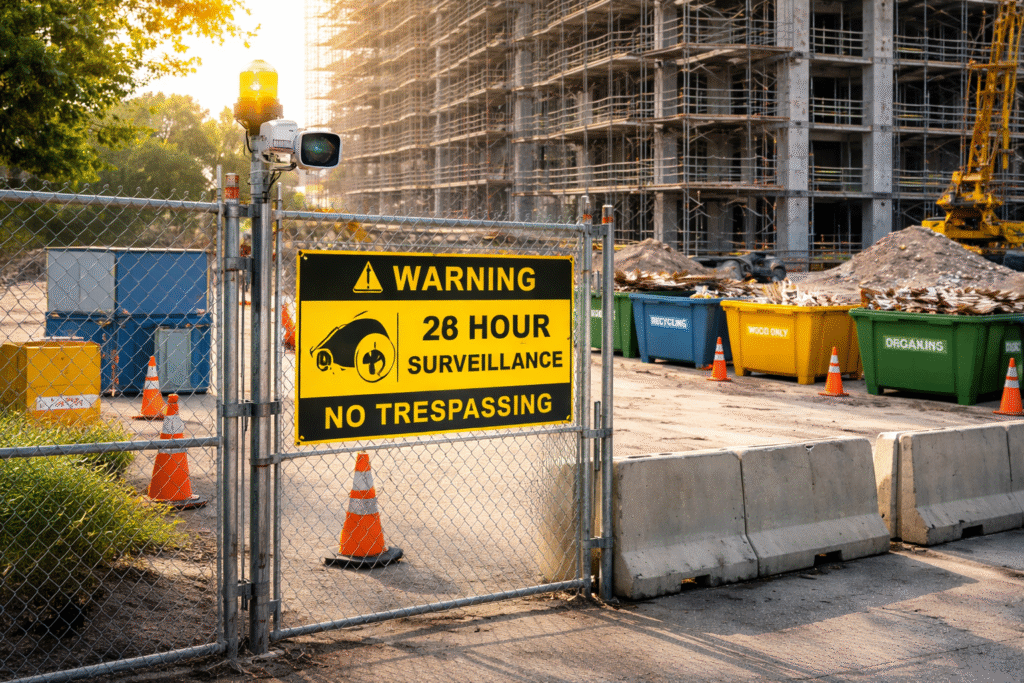
When Should Fencing Be Installed?
Earlier than most contractors think.
Ideally, fencing should be installed:
- Before heavy equipment mobilization
- Before material delivery
- Before demolition begins
- Before excavation starts
Waiting until mid-phase increases risk exposure.
The safest timeline? Secure first. Build second.
Common Fencing Mistakes to Avoid
Even experienced builders sometimes make these mistakes:
- Installing fencing too late
- Leaving gaps near delivery zones
- Failing to secure gates after hours
- Not adjusting fencing as project footprint changes
- Overlooking signage requirements
Fencing isn’t static. As projects evolve, perimeter needs may shift. Expansions, new phases, and staging changes require adjustments.
Treat fencing like a dynamic part of project management—not a one-time setup.
Quick Tips for Contractors
- Install fencing before materials arrive
- Establish controlled entry points immediately
- Review perimeter layout during site planning
- Adjust fencing as phases expand
- Combine physical barriers with signage and lighting
- Inspect gates and anchor points regularly
Why Fencing Is a Strategic Investment (Not a Line Item)
It’s easy to treat fencing as just another cost on the budget sheet. But in reality, it protects:
- Equipment investments
- Material inventory
- Workforce safety
- Insurance exposure
- Project timeline
The cost of proper fencing is almost always lower than the cost of one serious incident.
And when you look at it from that perspective, it’s not an expense—it’s protection.
How IVAN’S SITE SERVICES Supports Contractors
At IVAN’S SITE SERVICES, we understand that fencing isn’t just about barriers—it’s about creating controlled environments where projects can move forward safely and efficiently.
We work with contractors to:
- Install secure, reliable perimeter systems
- Adjust layouts as projects grow
- Support safety compliance requirements
- Maintain clean, professional site presentation
Because your site should feel protected the moment it opens.
Conclusion
A secure perimeter is more than a physical boundary—it’s the foundation for safety, operational efficiency, and professional credibility. When fencing is installed early and planned strategically, it reduces risk, improves workflow, and strengthens overall project control. In construction, small preventative decisions often prevent major problems. Starting with a strong perimeter is one of the smartest moves you can make.


