
Long-term construction projects require more than materials, labor, and equipment to stay productive and compliant. One of the most overlooked—but critically important—factors is planning for portable toilets for construction sites. When restrooms are poorly planned or improperly serviced, the result is not just inconvenience, but lost productivity, safety concerns, and potential regulatory issues.
For contractors managing projects that last weeks or months, restroom logistics must be approached strategically. Proper planning ensures worker comfort, supports health standards, and helps maintain a professional, well-organized jobsite. In this guide, we’ll break down what contractors should consider when planning portable restrooms for extended construction timelines.
Why Restroom Planning Matters on Long-Term Jobsites
On any construction site, efficiency depends on minimizing downtime. When restrooms are too far away, unavailable, or unsanitary, workers lose valuable time leaving the site or waiting for access. Over weeks or months, those minutes turn into significant labor costs.
Effective jobsite restroom planning supports:
- Consistent productivity
- Worker satisfaction and morale
- Compliance with safety and labor regulations
- Cleaner and more organized jobsites
- Reduced health-related disruptions
Long-term projects amplify these issues, making restroom planning a necessity—not an afterthought.
How Long-Term Projects Change Restroom Needs
Unlike short-term jobs, extended construction projects face evolving conditions. Crew sizes may fluctuate, work areas expand, and seasonal weather can affect sanitation needs. Restroom solutions must be flexible enough to adapt to these changes without disrupting operations.
Key factors that change over time include:
- Number of workers on-site
- Project phases and site layout
- Duration of daily work shifts
- Weather conditions
- Site accessibility
Failing to account for these variables often leads to overcrowded or poorly maintained restrooms, which negatively impacts the entire jobsite.
Sanitation for Extended Projects: What Makes It Different
Providing proper sanitation for extended projects requires more than placing a few units on-site. Extended use increases wear, waste volume, and maintenance needs. Without a structured service plan, sanitation conditions can deteriorate quickly.
Challenges Unique to Long-Term Sanitation
- Increased waste accumulation
- Higher frequency of servicing required
- Odor control over prolonged periods
- Greater exposure to bacteria and germs
- Higher expectations from workers and inspectors
Long-term sanitation must be proactive, not reactive. Planning ahead ensures restrooms remain clean, functional, and compliant throughout the project lifecycle.
Maintaining Construction Site Hygiene
Clean restrooms play a direct role in overall construction site hygiene. Poor sanitation doesn’t stay confined to restroom units—it spreads across the site through hands, tools, and shared surfaces.
Good hygiene practices help prevent:
- Illness outbreaks among workers
- Lost workdays due to health issues
- Contamination of common areas
- Negative impressions during inspections
- Complaints from clients or neighboring properties
Well-maintained portable restrooms contribute to a safer, healthier jobsite environment that supports long-term productivity.
Determining the Right Number of Portable Restrooms
One of the most common planning mistakes is underestimating how many restroom units are needed. Too few units lead to overcrowding, faster deterioration, and excessive downtime.
Factors That Influence Restroom Quantity
- Average number of workers per shift
- Length of workdays
- Type of work being performed
- Presence of female workers
- Distance between restrooms and work zones
As a general rule, more workers and longer shifts require additional units to maintain cleanliness and accessibility. Adjusting restroom numbers as the project evolves is essential for long-term success.
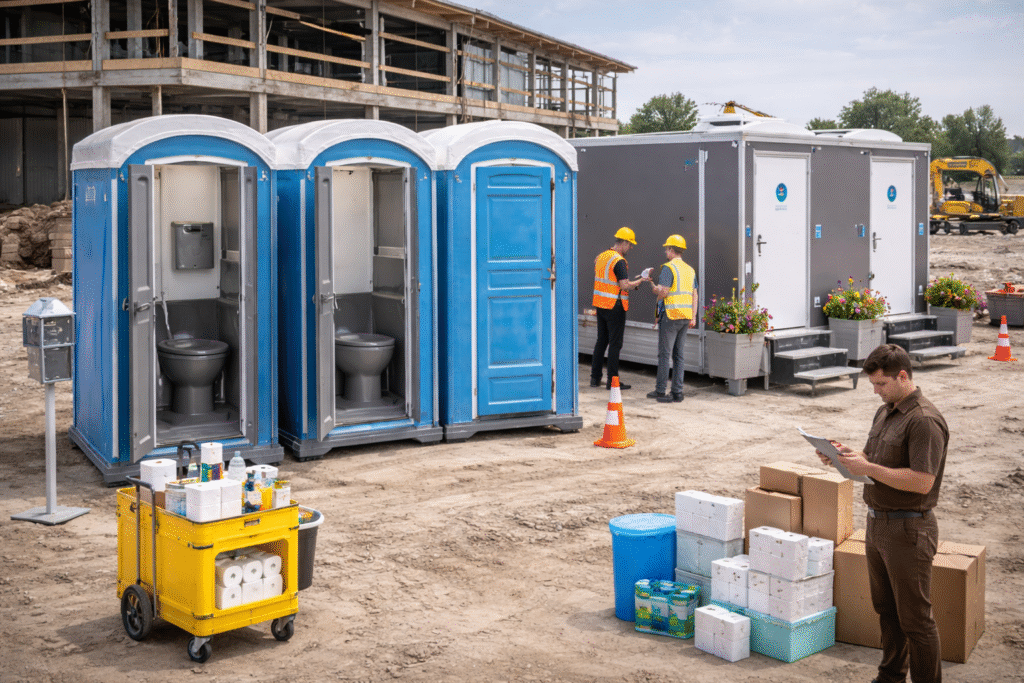
Importance of a Consistent Restroom Service Schedule
Even the best restroom setup will fail without proper maintenance. Establishing a reliable restroom service schedule is one of the most critical components of long-term restroom planning.
What a Service Schedule Should Include
- Regular pumping and waste removal
- Deep cleaning and sanitization
- Restocking supplies like toilet paper and sanitizer
- Inspection for damage or leaks
- Adjustments based on usage levels
Infrequent servicing leads to unsanitary conditions, while over-servicing wastes budget. A professional provider can tailor a service schedule to match actual site usage.
Strategic Placement of Portable Restrooms
Where restrooms are placed on the jobsite matters just as much as how many are provided. Poor placement can create bottlenecks, safety hazards, or underused units.
Best Practices for Restroom Placement
- Position units near high-activity areas
- Ensure easy access without blocking equipment paths
- Place on stable, level ground
- Maintain visibility while respecting privacy
- Adjust locations as the site layout changes
Proper placement reduces downtime and encourages consistent restroom use, which supports hygiene and efficiency.
Weather and Environmental Considerations
Long-term projects often span multiple seasons. Weather conditions directly affect restroom usability, maintenance needs, and worker comfort.
Seasonal Planning Tips
- Increase servicing during hot weather to control odors
- Secure units against wind or storms
- Provide handwashing stations during flu season
- Ensure accessibility during rain or mud conditions
- Consider additional ventilation in extreme heat
Planning for environmental factors prevents unexpected issues and keeps restrooms functional year-round.
Compliance and Professional Standards
Construction sites are subject to health and safety regulations that include restroom requirements. Failing to meet these standards can result in citations, fines, or work stoppages.
Professional restroom planning helps contractors:
- Meet OSHA and local health regulations
- Pass inspections without delays
- Maintain professional jobsite standards
- Protect company reputation
Compliance isn’t just about avoiding penalties—it’s about creating a safe, respectful workplace.
Why Professional Restroom Services Make a Difference
Managing restrooms internally often leads to inconsistent results and added responsibilities for site managers. Partnering with a professional service provider ensures restrooms are properly maintained without burdening your team.
Benefits of Professional Portable Restroom Services
- Customized restroom solutions for long-term projects
- Reliable maintenance and servicing
- Flexible adjustments as project needs change
- Consistent sanitation standards
- Reduced workload for site supervisors
With professional support, contractors can focus on building—not managing sanitation logistics.
Conclusion
Portable restrooms are a critical part of long-term construction planning, directly impacting productivity, health, and jobsite professionalism. By planning ahead, adjusting for changing conditions, and relying on experienced site service providers, contractors can ensure clean, reliable sanitation throughout the duration of their projects. A well-maintained restroom setup not only supports workers but also protects timelines, budgets, and reputations—making it an essential investment for any extended construction effort.


