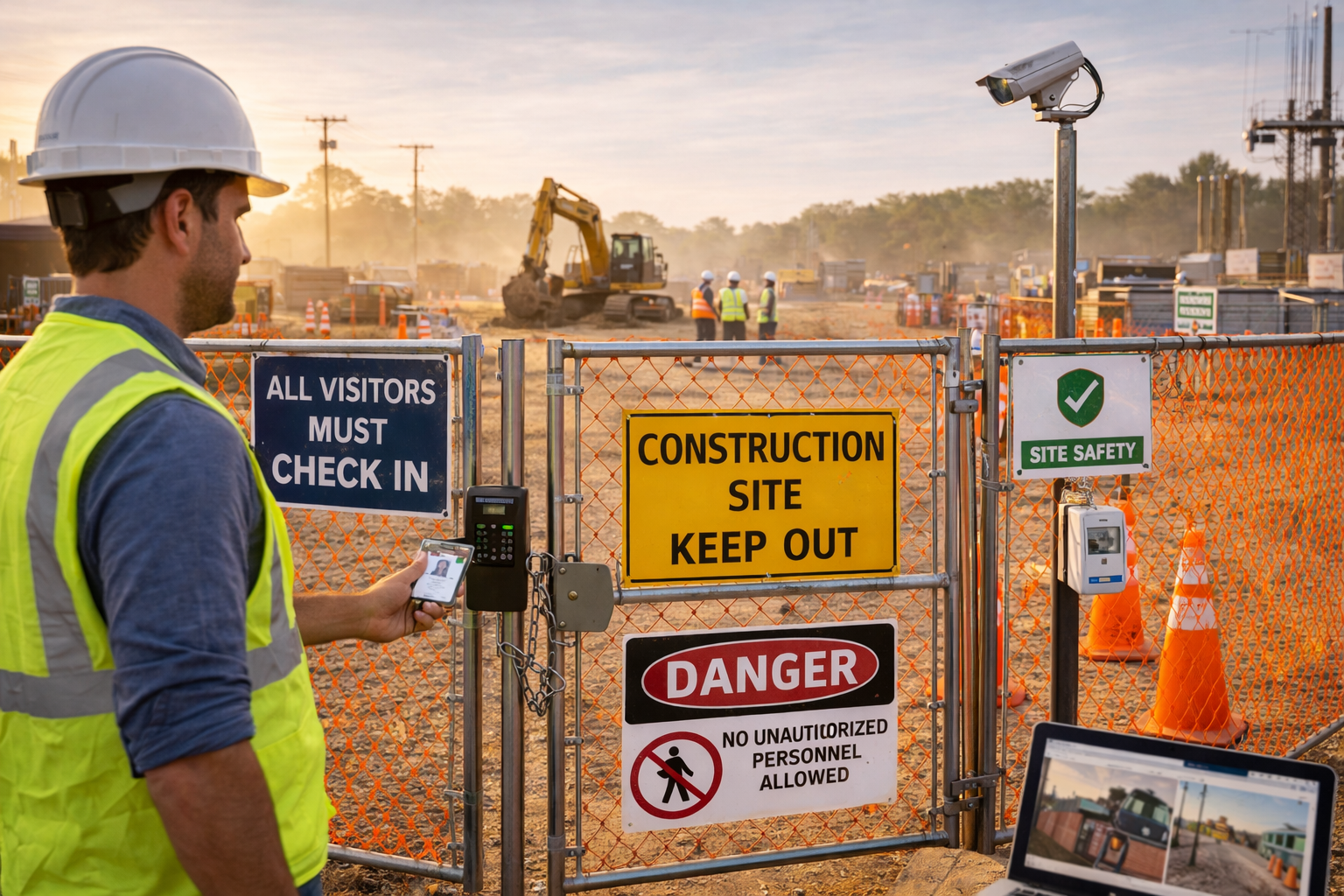
Construction sites are dynamic environments where safety, organization, and accountability must be maintained at all times. With multiple crews, heavy machinery, and constant movement, controlling who can enter and exit the site is not optional—it’s essential. Proper construction site fencing plays a critical role in protecting workers, securing assets, and ensuring compliance from the earliest stages of a project.
Temporary fencing and access control are often viewed as basic requirements, but when implemented strategically, they become powerful tools for reducing risk and improving overall site performance.
Why Site Access Control Is a Critical Safety Measure
Uncontrolled access creates unnecessary hazards. Unauthorized visitors, pedestrians, or vehicles entering an active jobsite are exposed to serious risks, while workers face distractions and safety concerns.
Effective fencing and access planning help contractors:
- Limit exposure to hazardous areas
- Reduce the risk of accidents and injuries
- Protect the public from construction dangers
- Establish clear site boundaries
- Maintain professional site standards
Safety begins at the perimeter—and that perimeter must be clearly defined.
The Role of Temporary Fencing in Modern Construction
Unlike permanent barriers, temporary fencing solutions are designed to adapt as the project evolves. They can be installed, relocated, and adjusted as site layouts change, making them ideal for construction environments.
Key advantages include:
- Flexibility for phased projects
- Quick installation and removal
- Customizable layouts
- Compatibility with access points and gates
Temporary fencing supports both safety and efficiency when integrated into overall site planning.
Managing Who Comes In and Out of the Jobsite
One of the most overlooked aspects of construction safety is jobsite access control. Knowing who is on-site—and why—helps contractors maintain accountability and respond quickly in emergencies.
Access control strategies may include:
- Designated entry and exit points
- Clearly marked visitor access areas
- Controlled delivery zones
- Secure gates and checkpoints
When access is managed intentionally, confusion and risk are significantly reduced.
Protecting Assets and Equipment
Construction sites often contain valuable tools, materials, and machinery. Without proper barriers, these assets are vulnerable to theft, vandalism, or unauthorized use.
Strong construction site security helps safeguard investments by:
- Deterring trespassing
- Reducing theft opportunities
- Protecting stored materials
- Supporting insurance requirements
- Maintaining site integrity after hours
Security is not just about loss prevention—it’s about continuity and peace of mind.
Compliance and Regulatory Responsibilities
Safety regulations require contractors to take reasonable steps to protect workers and the public. Inadequate fencing or access control can result in violations, fines, or shutdowns.
Meeting OSHA site safety compliance standards is easier when perimeter control is part of the initial site setup. Proper fencing demonstrates:
- Commitment to worker safety
- Awareness of regulatory obligations
- Proactive risk management
- Readiness for inspections
Compliance starts with visible, enforceable boundaries.
Establishing Clear Perimeters for Safer Operations
Clear boundaries help everyone understand where they can and cannot go. Effective perimeter control construction reduces confusion and supports smoother workflows.
Defined perimeters allow contractors to:
- Separate active work zones from staging areas
- Control vehicle and equipment movement
- Protect pedestrians and nearby properties
- Adjust site layouts as phases change
A well-defined perimeter keeps operations organized and predictable.
Preventing Unauthorized Entry on Active Jobsites
An open site invites problems. Whether it’s curious passersby or unauthorized personnel, uncontrolled access increases liability.
Creating a restricted access jobsite helps contractors:
- Limit liability exposure
- Protect workers and visitors
- Maintain focus and productivity
- Reduce incident investigations
- Strengthen overall safety culture
Restricted access is not about inconvenience—it’s about responsibility.
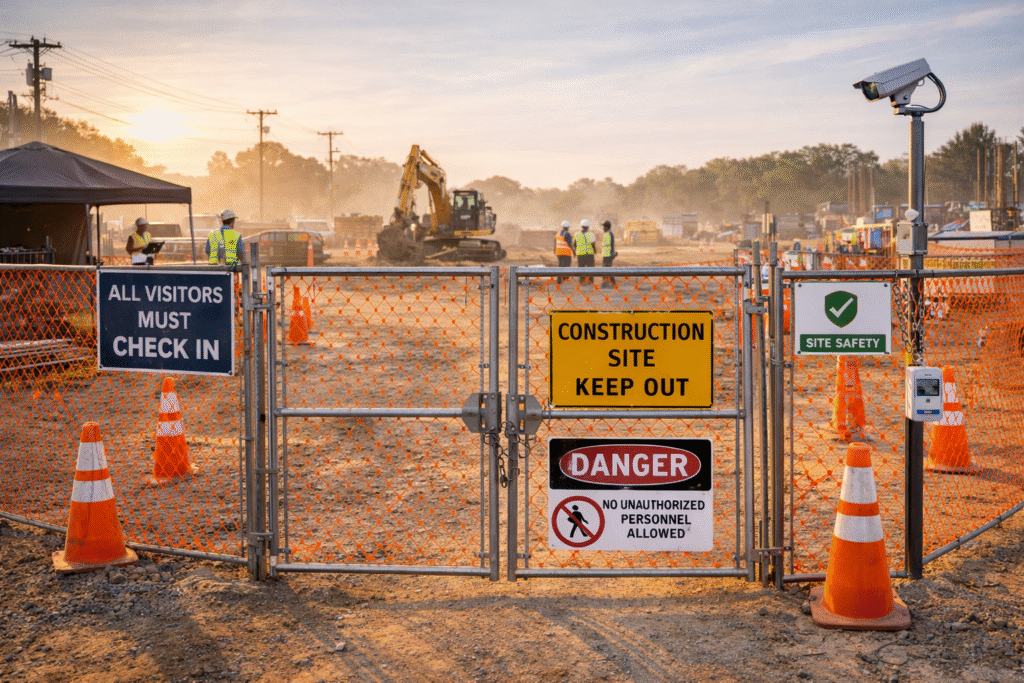
How Temporary Fencing Supports Project Efficiency
Beyond safety and compliance, fencing contributes to efficiency. Organized access points improve traffic flow, reduce interruptions, and help crews focus on their tasks.
Operational benefits include:
- Faster material deliveries
- Clear routing for vehicles and equipment
- Reduced downtime from disruptions
- Easier coordination between trades
Efficiency and safety often go hand in hand when access is properly managed.
Common Mistakes Contractors Make with Site Fencing
Even experienced teams can underestimate fencing needs. Common mistakes include:
- Installing fencing too late
- Leaving gaps or unsecured entry points
- Failing to adjust fencing as the site evolves
- Overlooking public-facing areas
- Treating fencing as a one-time task
Avoiding these issues requires ongoing attention and professional support.
Turning Access Control into a Strategic Advantage
Well-managed sites reflect strong leadership. Clients, inspectors, and workers notice when boundaries are clear and safety is prioritized.
Contractors who invest in proper fencing benefit from:
- Fewer incidents and claims
- Stronger regulatory standing
- Improved site organization
- Enhanced professional reputation
- Greater long-term cost control
Access control is not just a requirement—it’s a signal of quality management.
Conclusion
Temporary fencing and site access control are foundational elements of safe, compliant construction projects. By establishing clear boundaries, controlling entry points, and adapting fencing as the site evolves, contractors can protect workers, secure assets, and meet regulatory expectations with confidence. When safety and access are managed proactively, projects move forward more smoothly, efficiently, and responsibly from start to finish.