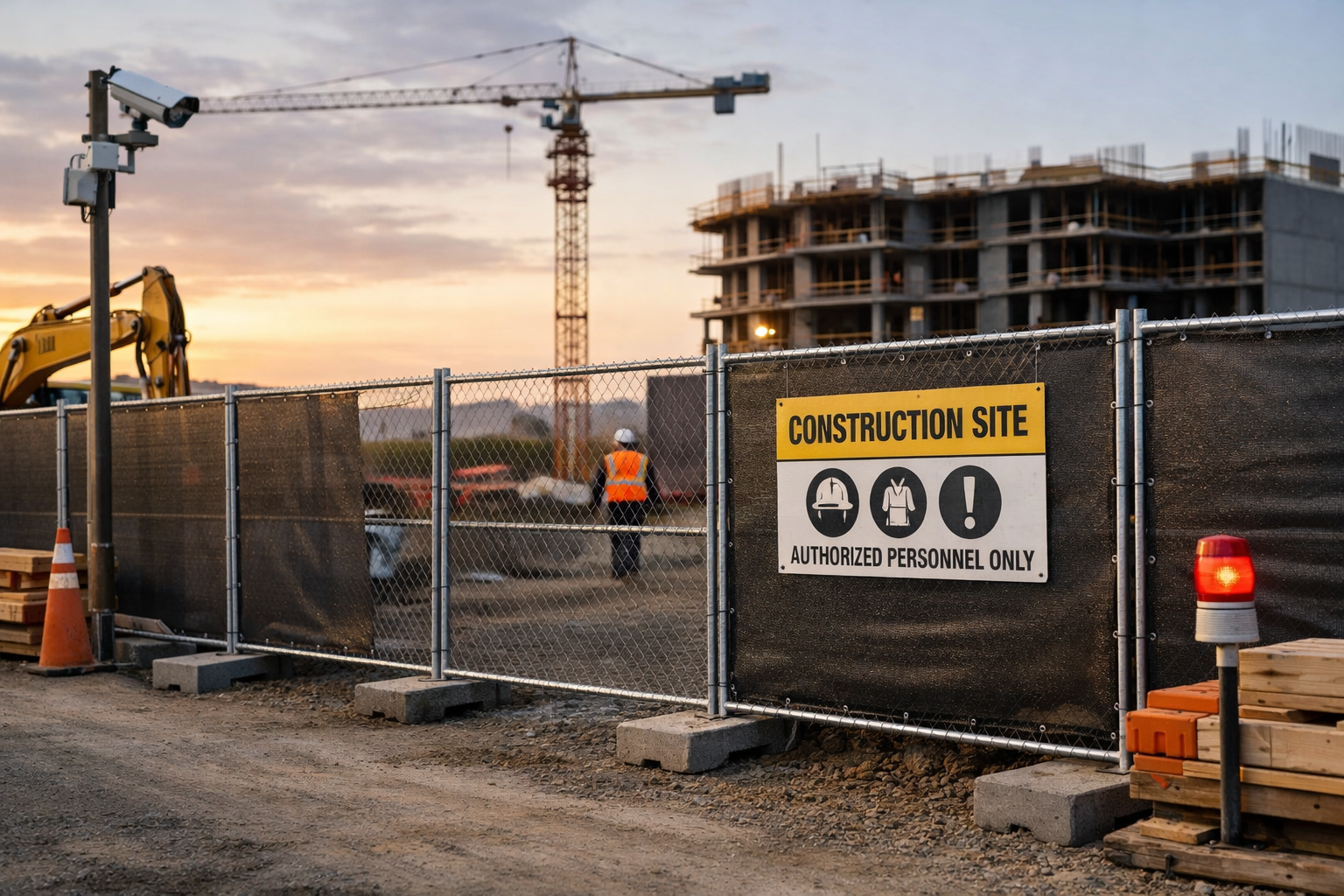
Construction sites are fast-paced environments where efficiency, safety, and worker well-being must coexist. While heavy equipment, materials, and schedules often dominate planning discussions, sanitation is frequently overlooked—despite its direct impact on productivity and risk reduction. Investing in professional sanitation services is not just about meeting minimum requirements; it’s about creating a healthier, more efficient jobsite where crews can perform at their best.
Proper sanitation plays a critical role in workforce morale, compliance, and overall project success, especially on medium- to long-term construction projects.
Why Sanitation Is a Core Jobsite Requirement
Every construction project depends on people. When basic hygiene needs are unmet, workers lose time, focus, and motivation. Poor sanitation leads to discomfort, increased health risks, and unnecessary downtime.
Effective jobsite sanitation ensures that crews have access to clean, functional facilities that support daily operations instead of interrupting them. This foundation allows workers to stay focused on their tasks rather than leaving the site to search for alternatives.
The Direct Link Between Hygiene and Productivity
Healthy workers are productive workers. When hygiene conditions are inadequate, illness spreads more easily, absenteeism increases, and job performance declines.
Supporting proper worker hygiene helps contractors:
- Reduce sick days
- Maintain consistent crew performance
- Improve morale and retention
- Minimize work interruptions
- Create a more professional site environment
When sanitation is handled proactively, productivity improves naturally across all trades.
Safety Starts with Clean Facilities
Sanitation is not only a comfort issue—it’s a safety issue. Unsanitary conditions can contribute to slips, contamination, and health hazards that put workers at risk.
A clean jobsite helps prevent:
- The spread of bacteria and viruses
- Unsafe restroom conditions
- Improper waste disposal
- Environmental contamination
- Negative inspection outcomes
Clean facilities signal that safety is a priority, reinforcing a culture of responsibility and care across the project.
Regulatory Compliance and Risk Reduction
Construction sites must comply with strict health and safety regulations. Failing to provide adequate sanitation can lead to fines, project delays, or even shutdowns.
Meeting OSHA requirements for sanitation protects contractors by:
- Reducing legal exposure
- Supporting successful inspections
- Demonstrating duty of care
- Preventing compliance-related delays
- Protecting company reputation
Compliance is not optional—and professional sanitation support makes it easier to stay aligned with regulations.
How Sanitation Impacts Worker Behavior
When workers lack access to proper facilities, they often leave the site, take extended breaks, or use unsafe alternatives. These behaviors reduce efficiency and increase liability.
Providing adequate worker sanitation helps:
- Keep crews on-site and on-task
- Reduce extended or unscheduled breaks
- Improve time management
- Maintain professional standards
- Support positive worker attitudes
Small improvements in sanitation often lead to noticeable gains in daily productivity.
Portable Solutions for Modern Jobsites
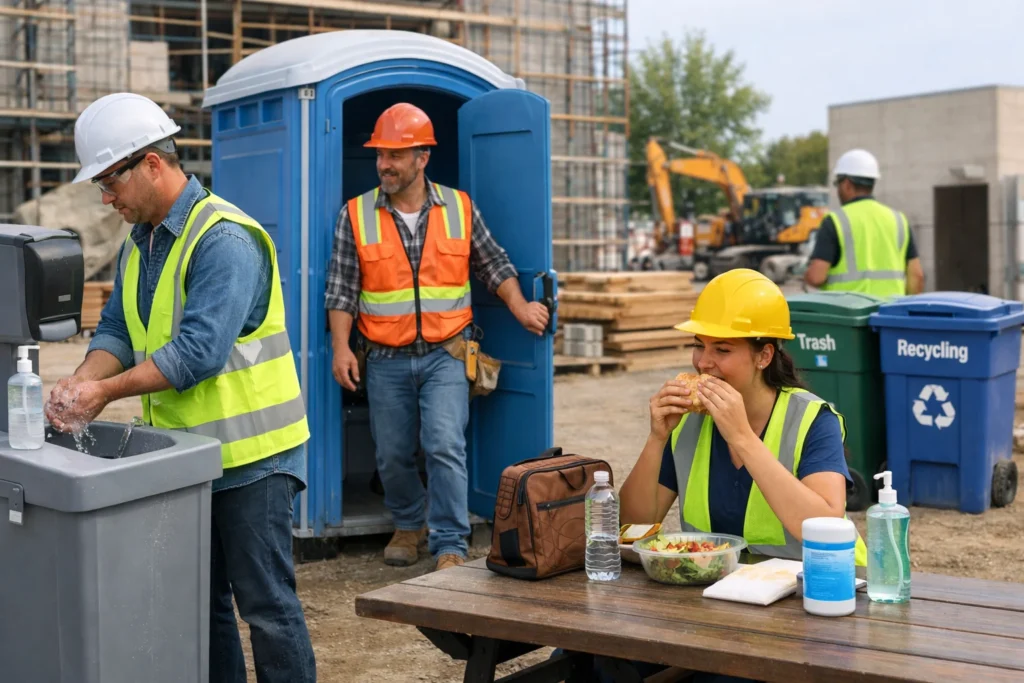
Not all construction sites have access to permanent restrooms or utilities. This is where flexible, professional portable sanitation solutions become essential.
Portable facilities provide:
- Accessibility in remote or undeveloped areas
- Scalable options as crew size changes
- Easy relocation as site layouts evolve
- Consistent cleanliness with scheduled servicing
Modern portable units are designed to meet both comfort and compliance needs, making them suitable for projects of any size.
Strategic Benefits for Contractors and Project Managers
Beyond worker comfort, sanitation services offer measurable operational benefits. Clean, well-maintained facilities reduce distractions and demonstrate professionalism to inspectors, clients, and visitors.
Strategic sanitation planning helps contractors:
- Streamline daily operations
- Improve site organization
- Enhance company image
- Support workforce well-being
- Avoid preventable delays
Sanitation is an operational investment that delivers returns throughout the project lifecycle.
Common Sanitation Mistakes That Hurt Productivity
Contractors sometimes underestimate sanitation needs, leading to issues that impact schedules and safety.
Common mistakes include:
- Underestimating crew size
- Infrequent servicing
- Poor facility placement
- Ignoring seasonal demand changes
- Reacting to problems instead of planning
Avoiding these issues requires partnering with experienced providers who understand construction workflows.
Key Advantages of Professional Sanitation Services
- Supports healthier, more productive crews
- Reduces jobsite safety risks
- Helps maintain regulatory compliance
- Improves worker morale and retention
- Prevents unnecessary downtime
- Enhances overall site professionalism
Sanitation as a Competitive Advantage
In today’s construction industry, efficiency and safety are key differentiators. Contractors who prioritize sanitation often outperform competitors by maintaining smoother operations and healthier teams.
Reliable sanitation support signals:
- Strong project management
- Commitment to worker welfare
- Attention to detail
- Professional standards
- Long-term cost control
These factors contribute directly to project success and client satisfaction.
Conclusion
Proper jobsite sanitation is far more than a basic requirement—it is a strategic tool that improves productivity, protects workers, and strengthens project outcomes. Clean, accessible facilities reduce health risks, support compliance, and keep crews focused on their work. By prioritizing sanitation planning and partnering with experienced professionals, contractors can create safer, more efficient jobsites that support long-term success from start to finish.