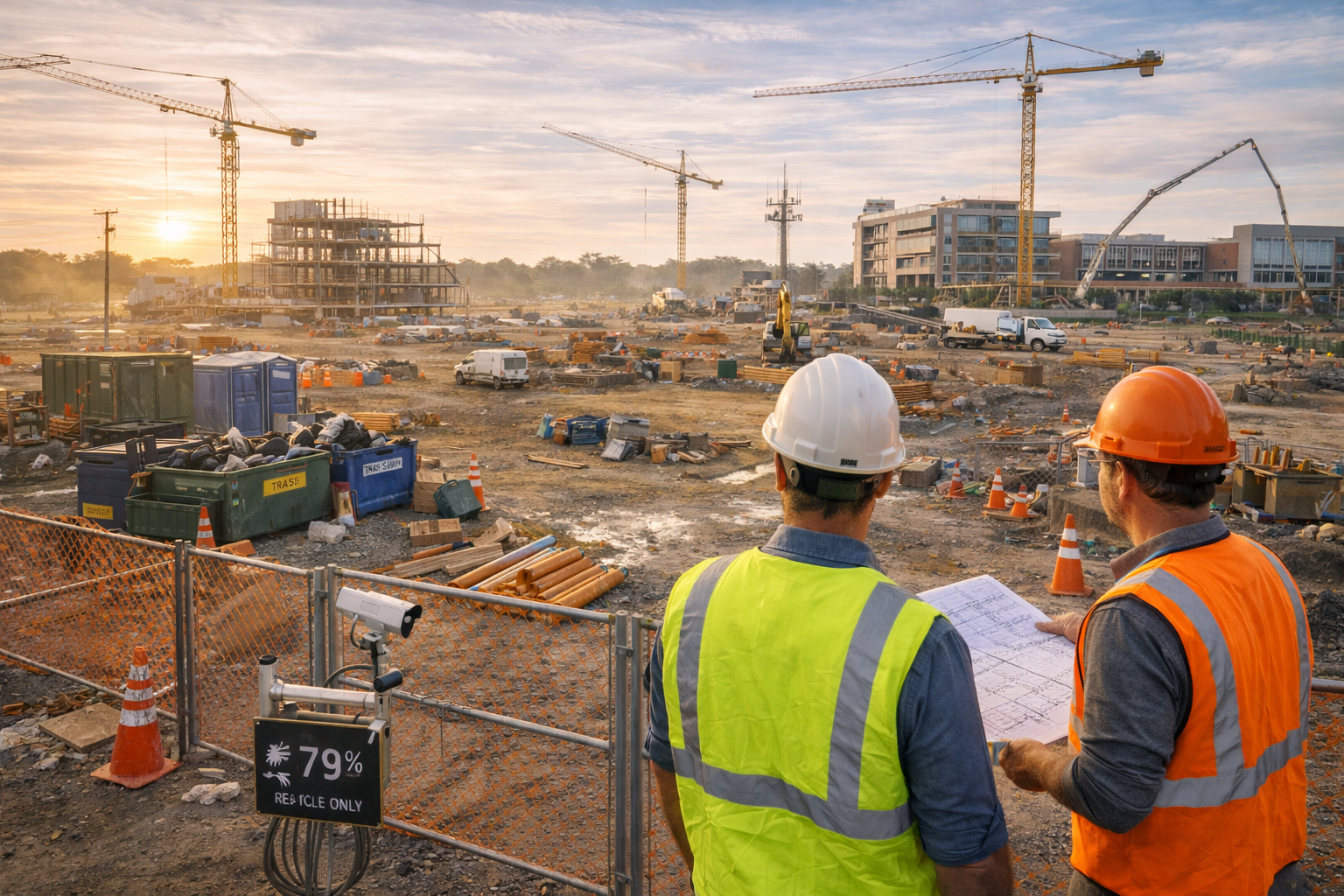
If you’ve been in construction long enough, you know one thing for sure: no matter how detailed your schedule is, the weather will test it.
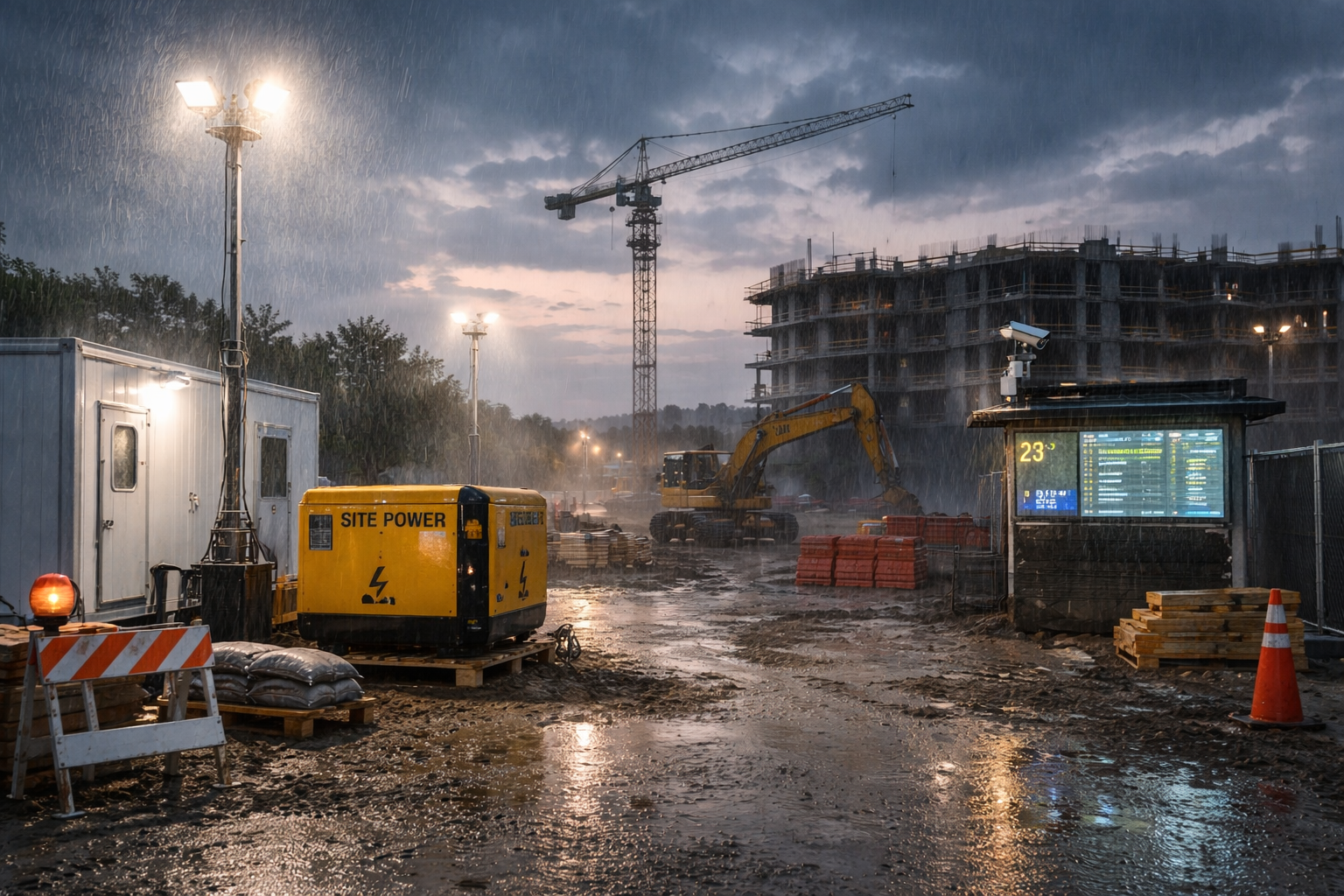
Rain floods trenches. Wind shuts down cranes. Extreme heat slows crews. Cold temperatures delay curing. And suddenly, your timeline starts slipping.
These aren’t minor inconveniences—they’re real construction challenges that can eat into profit margins fast.
But here’s the good news: while you can’t control the weather, you can control how prepared your site is to handle it.
Let’s talk about how proactive site services make the difference between a minor setback and a major disruption.
Weather Isn’t Random — It’s Predictable Risk
Every region has seasonal patterns. Heavy rain months. Wind seasons. Extreme heat waves. Freezing cycles.
And yet, many project schedules treat these as surprises.
When teams fail to account for weather delays construction, they build fragile timelines—ones that collapse under the first storm warning.
The smarter approach? Assume disruption will happen and build your response strategy early.
Why Delays Hurt More Than Just the Schedule
When weather hits, the obvious impact is time. But the hidden costs are often bigger:
- Equipment sitting idle
- Crews waiting without productivity
- Rescheduling subcontractors
- Rebooking inspections
- Resequencing deliveries
If your site isn’t prepared to pivot quickly, small weather interruptions compound into larger financial losses.
That’s where strategic planning comes in.
Flexibility Is the Real Competitive Advantage
Projects that stay on track during bad weather aren’t lucky—they’re flexible.
Effective jobsite service adjustments allow you to respond in real time. That might include:
- Repositioning dumpsters to avoid flooded zones
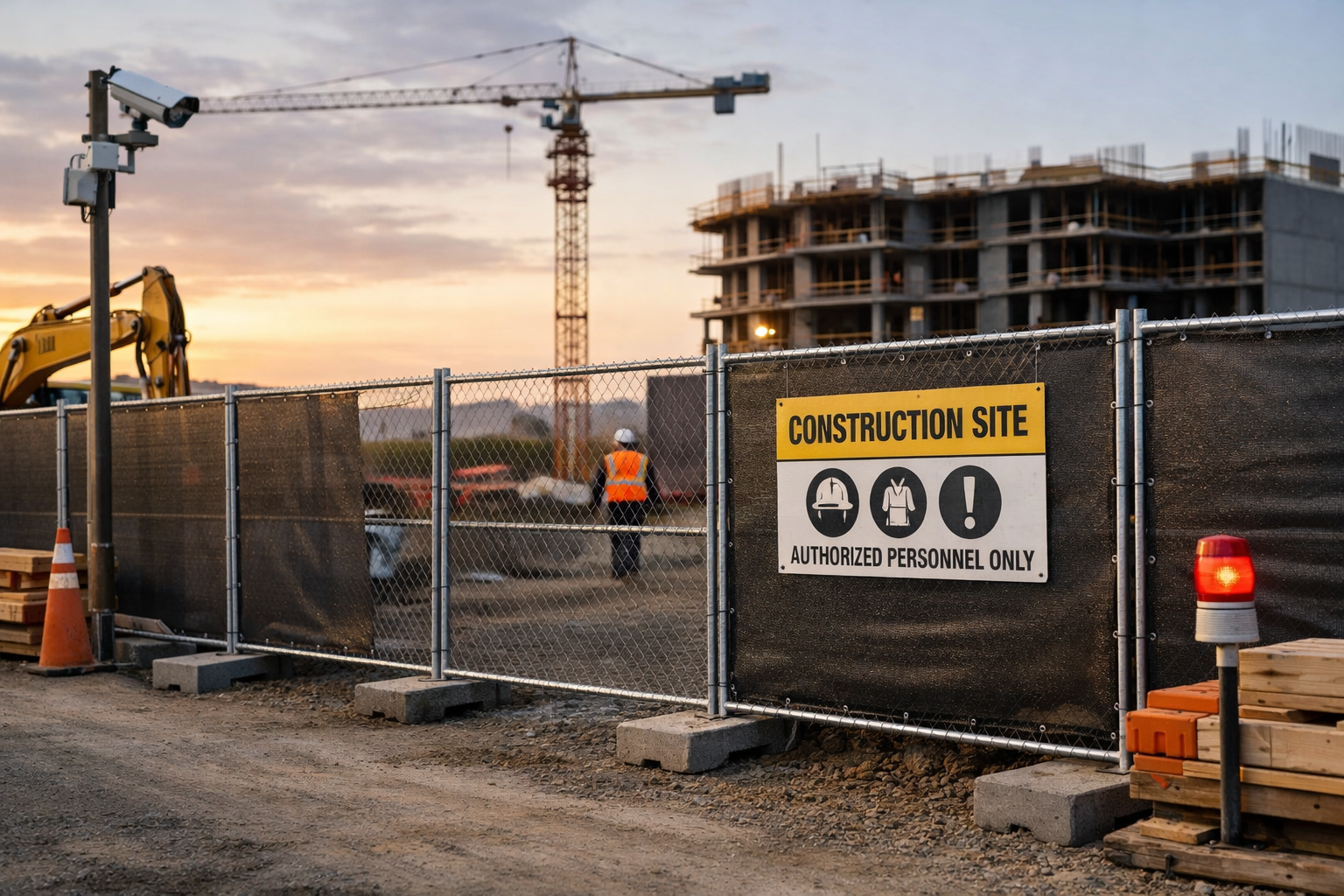
- Reinforcing fencing before high winds
- Adjusting portable sanitation placement
- Adding ground protection for muddy conditions
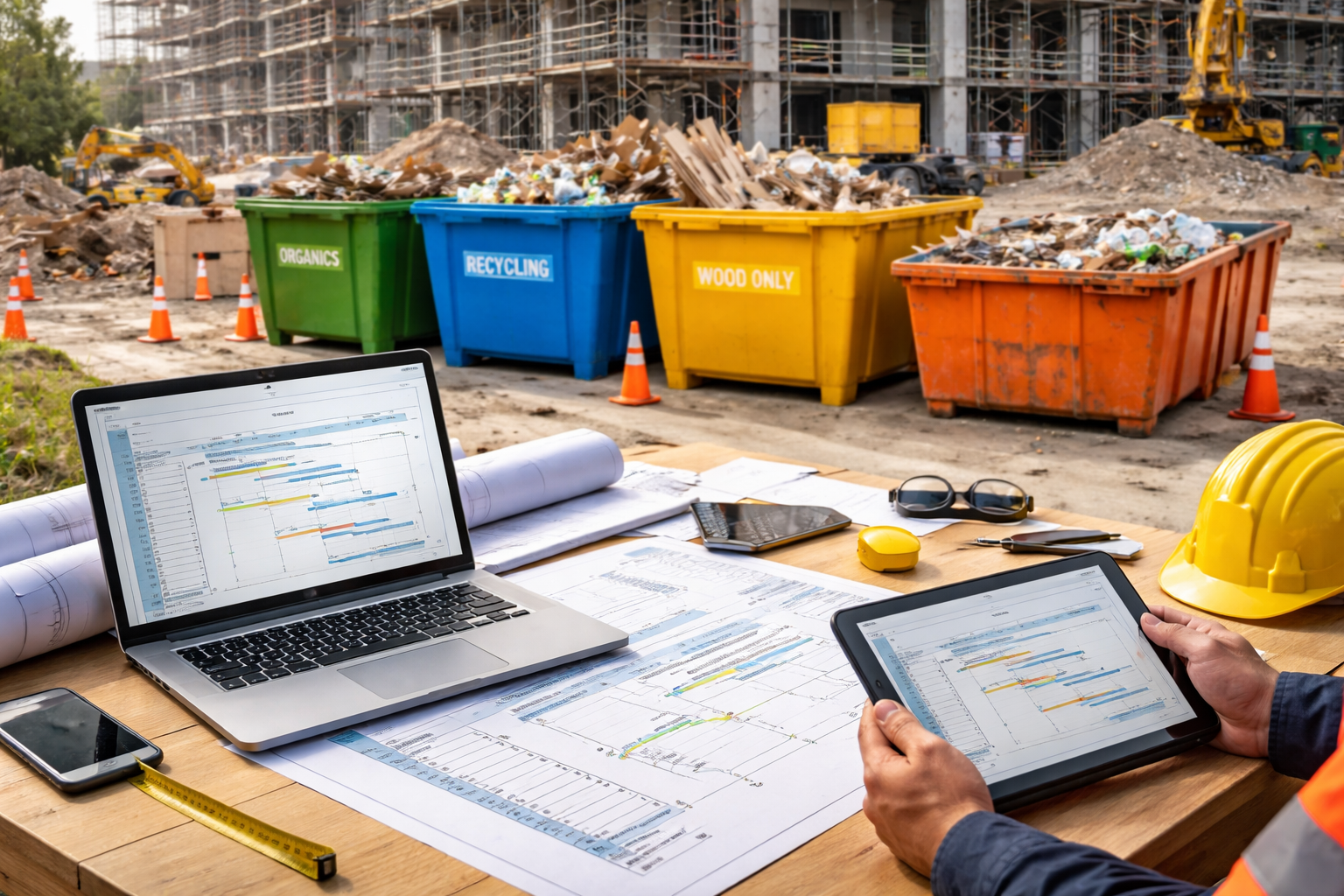
- Increasing debris removal frequency after storms
When services can shift with conditions, your operations stay fluid instead of stalled.
Extreme Conditions Demand Specialized Support
Normal operations don’t always work in extreme environments.
Heavy rain, high heat, snow, and freezing temperatures create safety risks and logistical complications. That’s why experienced contractors rely on adaptable site services in extreme weather.
Examples include:
- Stabilized access points during mud-heavy periods
- Anchored fencing systems during wind advisories
- Extra waste capacity after storm debris accumulation
- Strategic equipment placement to avoid pooling water
Extreme weather exposes weak preparation. Strong service partnerships help reinforce your site’s resilience.
The Real Goal: Minimize Downtime
Every minute a crew can’t work is money lost.
The objective isn’t eliminating weather disruption—it’s finding ways to prevent weather related downtime from spreading.
Here’s how proactive site planning helps:
- Identify flood-prone areas before excavation
- Install perimeter controls early
- Build drainage considerations into layout
- Schedule buffer days during peak storm seasons
- Maintain emergency service contact readiness
Preparation turns weather events into manageable pauses instead of extended shutdowns.
Weather Planning Should Start in Pre-Construction
Too often, weather planning becomes reactive.
But smart construction risk planning includes environmental risk assessment before ground is broken.
During pre-construction discussions, consider:
- Historical seasonal patterns
- Site elevation and drainage
- Soil stability during rain
- Heat index during peak labor months
- Wind exposure for tall structures
When environmental risk is part of your early planning conversation, your services can be structured accordingly.

Common Weather-Related Mistakes Contractors Make
Even experienced builders sometimes overlook key details:
- Ignoring seasonal forecasts
- Underestimating drainage needs
- Delaying reinforcement of temporary structures
- Failing to communicate contingency plans to crews
- Waiting until after a storm to adjust service capacity
Weather issues rarely become disasters overnight. They escalate when ignored.
Smart Site Layout Reduces Vulnerability
A well-organized site is inherently more weather-resistant.
Strategic layout decisions include:
- Elevated storage areas
- Clear drainage paths
- Stabilized entry routes
- Secured material staging
- Protected electrical components
These adjustments might seem small at the beginning—but during a heavy rainstorm, they make a significant difference.
How Prepared Sites Recover Faster
Here’s something interesting: two sites can experience the same storm, but recover at completely different speeds.
Why?
Because recovery speed depends on:
- Pre-storm preparation
- Debris removal capacity
- Accessibility planning
- Structural reinforcement
- Clear communication protocols
Sites that plan ahead often resume operations hours—or even days—before competitors.
That difference protects timelines and client confidence.
Quick Tips for Contractors
- Review seasonal weather patterns before finalizing schedules
- Build buffer time into high-risk months
- Secure fencing and temporary structures early
- Evaluate drainage before excavation begins
- Increase service flexibility during unpredictable seasons
- Communicate contingency plans to subcontractors
Weather Resilience Protects Your Reputation
Clients understand that weather is uncontrollable. What they don’t forgive easily is poor preparation.
When your site handles adverse conditions professionally, it communicates:
- Operational maturity
- Leadership strength
- Strategic foresight
- Risk awareness
On the other hand, visible chaos after a storm damages confidence quickly.
In competitive markets, reputation travels fast.
How IVAN’S SITE SERVICES Supports Weather-Ready Projects
At IVAN’S SITE SERVICES, we know that unpredictable conditions are part of the job. That’s why we focus on adaptability.
We help contractors:
- Reinforce and reposition fencing systems
- Adjust waste removal schedules after storms
- Support access stabilization during muddy conditions
- Maintain safe, organized perimeters
- Respond quickly to shifting site needs
Because when the weather changes, your support system should be ready to change with it.
Conclusion
Weather will always be part of construction. The difference between minor disruption and major delay lies in preparation. When projects are built with flexibility, adaptability, and proactive planning in mind, environmental setbacks become manageable. Strong site support systems protect productivity, safeguard crews, and preserve client trust. In an industry where timelines matter, resilience isn’t optional—it’s essential.