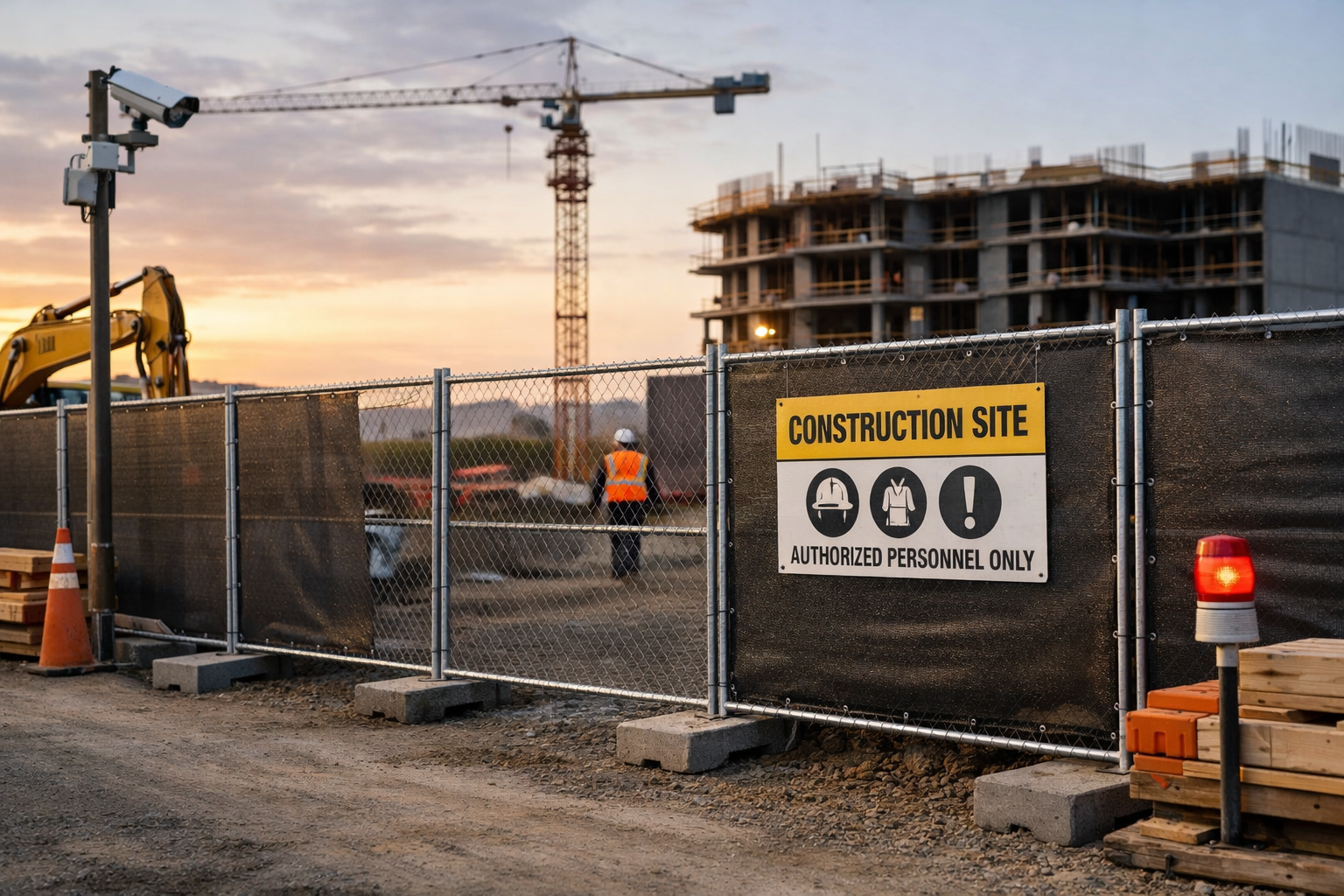
Every successful build starts long before equipment hits the ground. The real difference between a smooth project and a stressful one often comes down to one thing: strong construction project planning.
And yet, this is where many contractors unintentionally set themselves up for delays.
March is a great time to reset systems, sharpen processes, and tighten up your planning approach before peak construction season ramps up. Let’s walk through the most common pre-construction mistakes—and how the right site services partner can help you avoid them.
Mistake #1: Treating Pre-Construction Like a Paper Exercise
Blueprints? Checked. Permits? Submitted. Budget? Approved. But real pre construction preparation goes beyond paperwork. It includes physical readiness, service coordination, logistics alignment, and anticipating operational needs before crews arrive.
If sanitation, waste removal, fencing, access points, and service schedules aren’t mapped out early, your project starts in reactive mode instead of controlled execution.
Pro tip:
- Walk the site physically before mobilization
- Identify service placement areas
- Map vehicle routes
- Confirm delivery access
Planning in theory is different from planning in practice.
Mistake #2: Waiting Too Long for Site Service Setup
One of the biggest startup slowdowns happens when contractors delay site service setup until crews are already onsite.
When services are installed after work begins, it creates:
- Congestion
- Confusion
- Relocation costs
- Workflow disruption
The smarter move? Schedule services to be fully operational before the first day of active work. That way, your team steps onto a jobsite that’s ready to perform.
Mistake #3: Overlooking Layout Efficiency
Early construction site planning isn’t just about where the building goes—it’s about how everything moves around it.
Think about:
- Dumpster placement
- Sanitation zones
- Equipment staging
- Entry and exit points
- Pedestrian safety paths
Poor layout decisions made early can follow a project for months. A well-organized site increases safety, productivity, and professionalism from day one.
Mistake #4: Ignoring Logistics Until It’s Too Late
Construction doesn’t fail because of lack of skill—it fails because of friction.
Weak jobsite logistics planning creates bottlenecks between trades, delays deliveries, and wastes labor hours.
Common logistics mistakes include:
- Blocking access routes
- Overlapping trade zones
- Not coordinating service timing
- Underestimating material storage needs
When logistics are mapped alongside services, the job runs smoother—and crews stay focused instead of frustrated.
Mistake #5: Skipping a Formal Readiness Review
Many contractors assume that once permits are cleared, the site is ready. But readiness is operational—not administrative.
A simple site readiness checklist can prevent expensive first-week issues.
Your checklist should include:
- Are sanitation units installed?
- Is debris removal scheduled?
- Is fencing secured?
- Are access gates operational?
- Are safety markers in place?
This small step can eliminate early chaos and set a professional tone immediately.
Mistake #6: Underestimating the Construction Startup Phase
The construction startup phase is where momentum is either built—or lost.
Crews are learning site flow. Deliveries begin. Supervisors test coordination systems. If services aren’t fully synchronized, early inefficiencies multiply quickly.
The first two weeks often determine:
- Productivity patterns
- Safety culture
- Trade coordination rhythm
- Inspection readiness
Strong startup support builds confidence across the entire team.

Mistake #7: Planning for “Now” Instead of Planning for Growth
Many projects expand. Crews grow. Timelines shift. Phases overlap.
Planning only for the initial scope can leave contractors scrambling mid-project.
Instead, ask:
- What happens if workforce doubles?
- What if debris volume increases?
- What if timelines accelerate?
- Can services scale without disruption?
Growth-ready planning prevents reactive stress later.
Why Site Services Should Be Part of Planning Conversations
Too often, site services are treated as secondary arrangements rather than strategic components of planning.
In reality, services directly affect:
- Safety performance
- Productivity levels
- Trade coordination
- Inspection outcomes
- Client perception
When services are included in early planning discussions, the entire project benefits.
- Strong planning reduces costly startup delays
- Early service coordination prevents congestion
- Organized layouts improve workflow
- Logistics alignment minimizes trade conflict
- Startup readiness builds long-term momentum
- Scalable planning protects against unexpected growth
The Business Impact of Better Planning
Well-executed planning does more than make jobsites cleaner—it protects profitability.
Better planning leads to:
- Fewer emergency adjustments
- Lower downtime costs
- Reduced safety incidents
- Stronger labor efficiency
- More predictable timelines
And in competitive markets, predictability wins contracts.
How IVAN’S SITE SERVICES Supports Smarter Planning
At IVAN’S SITE SERVICES, we believe planning should remove stress—not create it. Our team works with contractors before ground is broken to align services with real operational needs.
We help you:
- Establish clean, organized startups
- Coordinate service timing with mobilization
- Adjust layouts as phases evolve
- Scale services as projects grow
Because when the foundation is strong, everything built on top of it performs better.
Conclusion
The difference between a chaotic startup and a confident one is rarely luck—it’s preparation. When contractors take the time to plan services, logistics, and site readiness before work begins, they create an environment where crews can focus, productivity rises, and risks decrease. A strong start sets the tone for the entire project. And when planning is done right, success feels intentional—not accidental.