
Weather is one of the most unpredictable factors in construction. From heavy rain and high winds to extreme heat or freezing temperatures, changing conditions can disrupt workflows, damage materials, and create safety risks. These realities are some of the most persistent construction challenges contractors face, especially on projects with tight schedules and multiple moving parts.
While weather cannot be controlled, its impact on jobsite services can be managed with planning, flexibility, and the right operational strategies.
Why Weather Has Such a Strong Impact on Jobsites
Construction sites are exposed environments. Unlike indoor facilities, they are directly affected by daily and seasonal weather changes. Jobsite services must operate under these same conditions, making adaptability essential.
Weather influences:
- Site accessibility
- Worker safety and comfort
- Equipment performance
- Material handling and storage
- Service schedules and frequency
Understanding these impacts helps contractors prepare instead of react.
How Weather Delays Affect Project Timelines
Few issues disrupt schedules as consistently as weather delays construction events. Rain, snow, or extreme temperatures can halt work entirely or slow progress enough to cause cascading delays.
Service-related impacts may include:
- Missed pickups or deliveries
- Limited access for service vehicles
- Increased debris accumulation
- Temporary shutdowns of certain site areas
When delays occur, having flexible service support becomes critical to recovery.
Adjusting Jobsite Services to Changing Conditions
Effective project management requires quick responses to weather shifts. Proactive jobsite service adjustments help maintain operations even when conditions are less than ideal.
These adjustments may involve:
- Modifying service schedules
- Relocating service areas
- Increasing or decreasing service frequency
- Coordinating around weather windows
Adaptability minimizes downtime and keeps crews productive when possible.
Managing Site Services in Extreme Conditions
Harsh weather demands specialized planning. Whether dealing with heatwaves, cold snaps, or severe storms, site services in extreme weather must prioritize safety and reliability.
Key considerations include:
- Maintaining safe access routes
- Preventing overflow or contamination
- Supporting worker health and hygiene
- Protecting equipment and materials
Extreme conditions require more than standard procedures—they require anticipation and coordination.
Reducing Downtime Through Proactive Planning
Downtime is expensive. Lost hours affect labor costs, schedules, and client expectations. Contractors who plan ahead can prevent weather related downtime by integrating weather considerations into service planning.
Preventive strategies include:
- Monitoring forecasts regularly
- Building flexibility into service contracts
- Scheduling around expected conditions
- Preparing contingency plans for severe weather
Prepared sites recover faster when conditions improve.
Weather as a Risk Management Factor
Weather should be treated as a predictable risk, not an unexpected disruption. Integrating weather into construction risk planning helps contractors manage uncertainty more effectively.
Risk-aware planning allows teams to:
- Identify vulnerable phases of construction
- Allocate resources strategically
- Reduce safety incidents
- Protect budgets and timelines
When weather is part of the plan, its impact is easier to absorb.
How Weather Impacts Safety and Compliance
Weather-related hazards increase the likelihood of accidents. Wet surfaces, high winds, and extreme temperatures all elevate risk levels.
Strong site services help maintain safety by:
- Keeping work areas clear and organized
- Supporting proper waste containment
- Maintaining access during adverse conditions
- Reducing emergency response needs
Safety-focused planning protects workers and supports compliance even in challenging conditions.
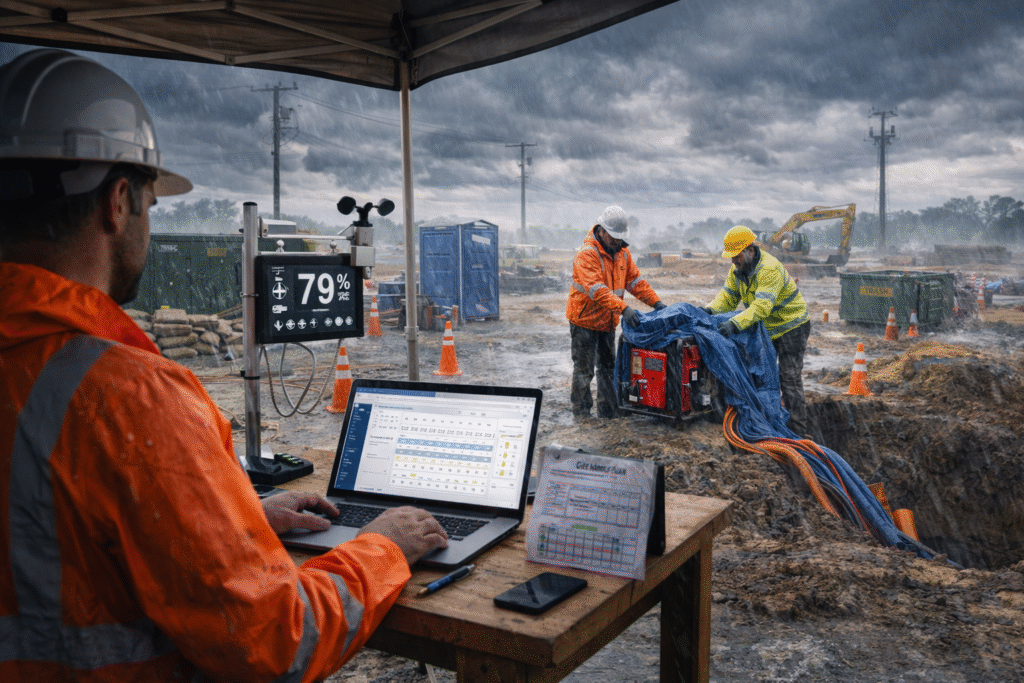
Operational Benefits of Weather-Ready Site Services
Weather-ready services don’t just reduce risk—they improve overall efficiency. When contractors know services can adapt, planning becomes more confident and proactive.
Operational benefits include:
- Fewer emergency adjustments
- Better coordination between trades
- Improved schedule reliability
- Stronger crew morale
- More consistent site standards
Preparedness builds resilience across the project.
Common Mistakes Contractors Make with Weather Planning
Many weather-related disruptions are preventable. Common mistakes include:
- Ignoring seasonal patterns
- Overly rigid service schedules
- Delayed response to forecasts
- Lack of contingency planning
- Treating weather as unavoidable downtime
Avoiding these errors requires a mindset shift from reaction to preparation.
Turning Weather Challenges Into Managed Variables
Weather will always be part of construction—but it doesn’t have to control outcomes. Contractors who plan for variability gain a strategic advantage by staying adaptable and prepared.
Well-managed weather strategies lead to:
- Fewer disruptions
- Safer jobsites
- Improved client confidence
- Stronger operational control
- More predictable project outcomes
Conclusion
Weather conditions are an unavoidable part of construction, but their impact on jobsite services can be managed with the right approach. By planning ahead, adjusting services proactively, and treating weather as a core risk factor, contractors can protect productivity, safety, and schedules. When jobsite services are designed to adapt, projects remain resilient—even when conditions are unpredictable.


