
Keeping restrooms functional, clean, and compliant is a critical part of maintaining a safe and productive work environment. Harsh temperatures—whether freezing cold or blazing hot—can create serious sanitation challenges that impact crew comfort, health, and regulatory compliance. Understanding how to properly maintain a portable toilet during extreme weather ensures your jobsite stays safe, efficient, and aligned with federal standards.
Meeting OSHA Standards in Challenging Weather Conditions
Federal guidelines require contractors to provide adequate restroom facilities for workers, regardless of temperature or jobsite conditions. Failure to follow these rules can result in fines, shutdowns, or unsafe work environments.
Staying aligned with OSHA portable toilet requirements involves ensuring proper unit quantity, accessibility, privacy, and cleanliness levels. During harsh weather, this also includes taking extra steps to ensure that the units remain functional, visible, and safe for use. Protective placement, secure anchoring, and scheduled inspections help maintain compliance even when temperatures drop or storms arrive.
Keeping Units Clean When Weather Makes It Difficult
Cold fronts, rainstorms, and high winds can complicate upkeep routines. Freezing temperatures can thicken waste, create odors, or block flushing mechanisms in certain units. Conversely, heat waves accelerate bacterial growth and increase unpleasant smells.
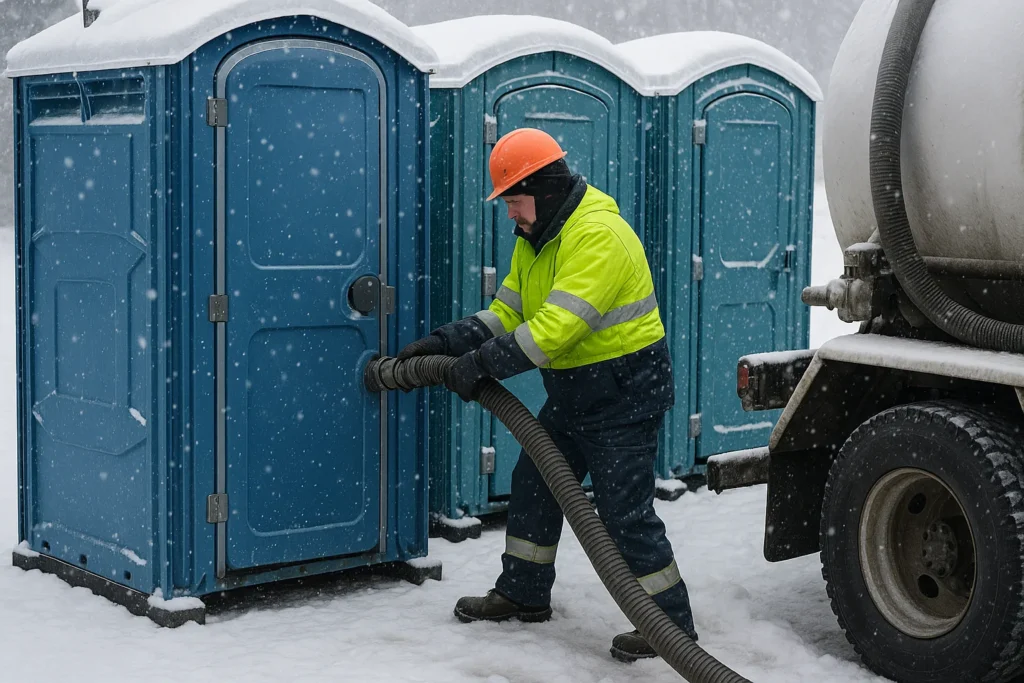
Implementing reliable portable toilet cleaning procedures helps prevent sanitation issues that compromise worker health. This includes adding winter-safe deodorizers, insulating tanks to prevent freezing, performing more frequent pump-outs during temperature spikes, and checking ventilation systems to keep air circulating. A consistent cleaning schedule ensures the interior remains hygienic regardless of the season.
Improving Hygiene Standards to Protect the Crew
A well-maintained sanitation station enhances morale, reduces contamination risks, and supports a healthier work environment. Workers rely on clean units to wash up, reduce germ exposure, and stay comfortable throughout long shifts.
Prioritizing jobsite sanitation involves providing adequate handwashing stations or sanitizer dispensers, keeping pathways clear of mud or ice, and ensuring regular inspections throughout the workday. Proper signage, lighting, and access control also contribute to a safer restroom environment in both large and small jobsites.
Preventing Damage and Freezing During Winter Projects
Cold climates present unique challenges for restroom facilities. Tanks can freeze, doors can jam, and interior surfaces can become dangerously slippery. Contractors must anticipate these issues to avoid unexpected downtime or damaged equipment.
Managing portable toilets in cold weather requires proactive winterization steps such as repositioning units away from high-wind zones, placing them on level surfaces to prevent tipping, using non-toxic antifreeze solutions in tanks, and installing insulated covers to maintain temperature control. These precautions keep units functional and safe for crew members even during extreme cold snaps.
Conclusion
Extreme temperatures shouldn’t compromise worker comfort or regulatory compliance. With consistent maintenance routines, smart placement strategies, and an understanding of federal sanitation rules, contractors can keep restrooms reliable and hygienic throughout every season. Ivan’s Site Services supports these efforts with dependable solutions that help maintain high standards of cleanliness and jobsite safety—no matter the weather.


