Managing debris effectively is one of the most crucial components of a productive and legally compliant jobsite. As regulations tighten and disposal costs rise, teams must adopt smarter strategies to reduce expenses, streamline workflow, and maintain safe conditions. A strong focus on construction waste ensures your site runs efficiently while minimizing environmental impact.
Why Sorting Debris Matters for Modern Projects
Unsorted materials lead to unnecessary hauling fees, increased landfill disposal, and greater risk of regulatory violations. When crews understand the importance of separating materials early, your project gains efficiency from the ground up.
Implementing construction waste sorting creates immediate improvements in overall workflow. Workers spend less time moving piles around, recyclable materials stay clean, and hazardous items remain isolated—preventing costly contamination penalties. With organized systems in place, your team can manage materials confidently and reduce unnecessary labor.
Improving Sustainability Through Jobsite Recycling
Recycling is more than a trend—it’s now a central expectation for responsible construction operations. Many materials generated during a project can be processed for reuse, lowering disposal fees and reducing environmental footprint.
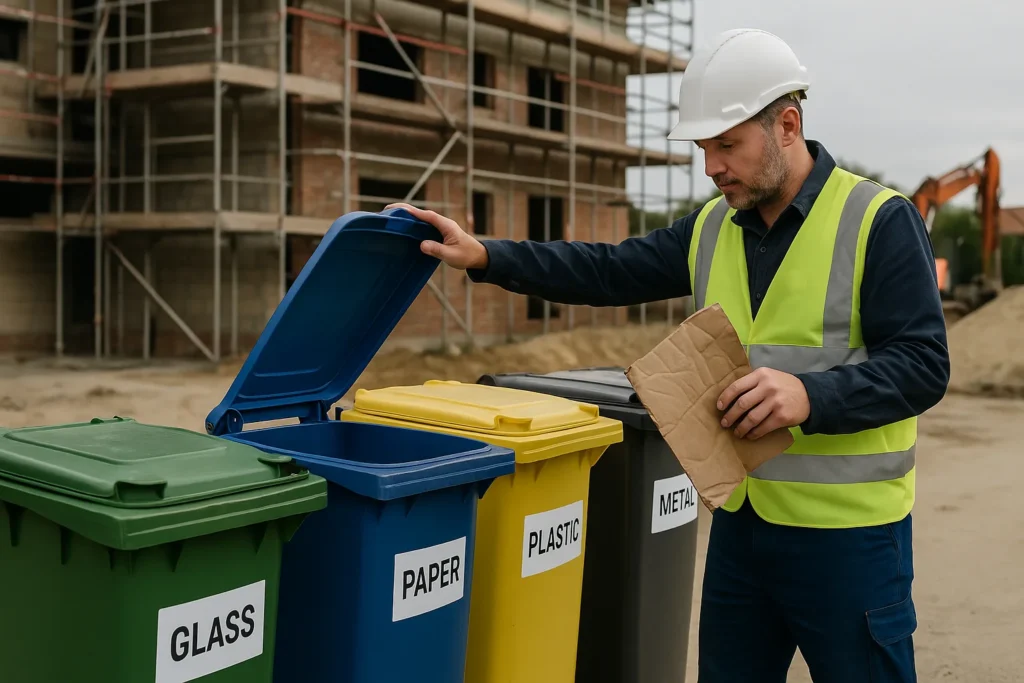
Effective jobsite recycling systems promote sustainable practices by identifying what can be recovered, such as metals, concrete, cardboard, plastics, and untreated wood. Properly labeled bins, onsite signage, and crew training sessions help ensure recycling streams stay clean and usable. These efforts also support community sustainability goals and strengthen your company’s environmental reputation.
Meeting Local, State, and Federal Regulations
Every construction site must follow rules related to disposal, hazardous materials, and documentation. Poor handling can result in citations, fines, or even work stoppages. Smart sorting helps teams stay ahead of these requirements by ensuring debris is categorized appropriately from the start.
Staying aligned with waste management compliance means maintaining accurate disposal records, adhering to designated sorting protocols, and ensuring hazardous materials are handled by certified professionals. Clear guidelines and consistent monitoring help prevent costly violations and keep the project on schedule.
Creating Clear Separation Systems for Safer Worksites
Beyond compliance and cost savings, organized debris handling directly impacts crew safety. Mixed piles hide nails, sharp edges, heavy materials, and hazardous substances, increasing the risk of onsite injuries.
Establishing structured construction debris separation practices prevents dangerous cross-contamination and keeps walking paths clear. Marked zones, color-coded containers, and predictable loading procedures help minimize confusion. Workers experience fewer obstacles, and equipment operators can maneuver more safely.
Conclusion
Smart debris sorting isn’t just good practice—it’s an investment in efficiency, safety, and long-term savings. By establishing consistent systems for separating materials, training your team, and maintaining regulatory alignment, your projects operate more smoothly and responsibly. Ivan’s Site Services is committed to supporting these efforts with reliable solutions that keep your site clean, compliant, and cost-effective from start to finish.