As the final weeks of the year approach, construction companies rush to complete projects, organize their worksites, and prepare for a fresh start in January. But one task that often gets delayed or minimized is construction cleanup—a critical step that impacts safety, efficiency, and overall project costs. Ending the year with a clean, orderly site not only improves operational flow but also reduces expenses associated with rushed cleanup efforts, unnecessary waste buildup, and costly delays in the new year.
This guide breaks down why year-end cleanup matters, how proper waste management can streamline your workflows, and how construction teams can save significant time and money by planning strategically. Whether your jobsite needs debris removal, deep cleaning, or final disposal services, understanding how to manage year-end cleanup with the right resources makes all the difference.
Why Year-End Cleanup Matters for Construction Sites
Ignoring or postponing cleanup can quickly create safety hazards, wasted materials, and disorganization. By contrast, a comprehensive end of year construction cleanup provides structure and stability. It ensures your site is fully prepared for inspections, handoffs, and new phases of construction—while protecting your team and preserving your equipment.
Key Benefits of Completing Cleanup Before Year-End
- Ensures compliance with local regulations
- Reduces workplace accidents and liability
- Improves productivity by removing clutter
- Protects tools, machinery, and building materials from damage
- Cuts costs by eliminating rework and repeated disposal trips
- Helps teams start the new year without backlogs
Construction sites operate best when waste and debris are kept under control, especially before extended holiday periods or seasonal weather changes.
The Importance of Efficient Jobsite Waste Removal
Effective jobsite waste removal is one of the most powerful ways to streamline year-end cleanup. Waste accumulation slows down crews, obstructs pathways, and creates hazards that negatively impact both safety and workflow. A planned waste removal strategy reduces unnecessary downtime and makes it easy to complete final tasks before deadlines.
How Smart Waste Removal Saves Time
- Prevents the need for multiple small disposal trips
- Eliminates time spent navigating around debris piles
- Improves access to work areas and equipment
- Allows subcontractors to complete their tasks without obstruction
When waste is removed efficiently, labor hours are used more effectively—saving money and keeping teams focused on high-value tasks.
Post Construction Cleanup: The Final Step That Can’t Be Skipped
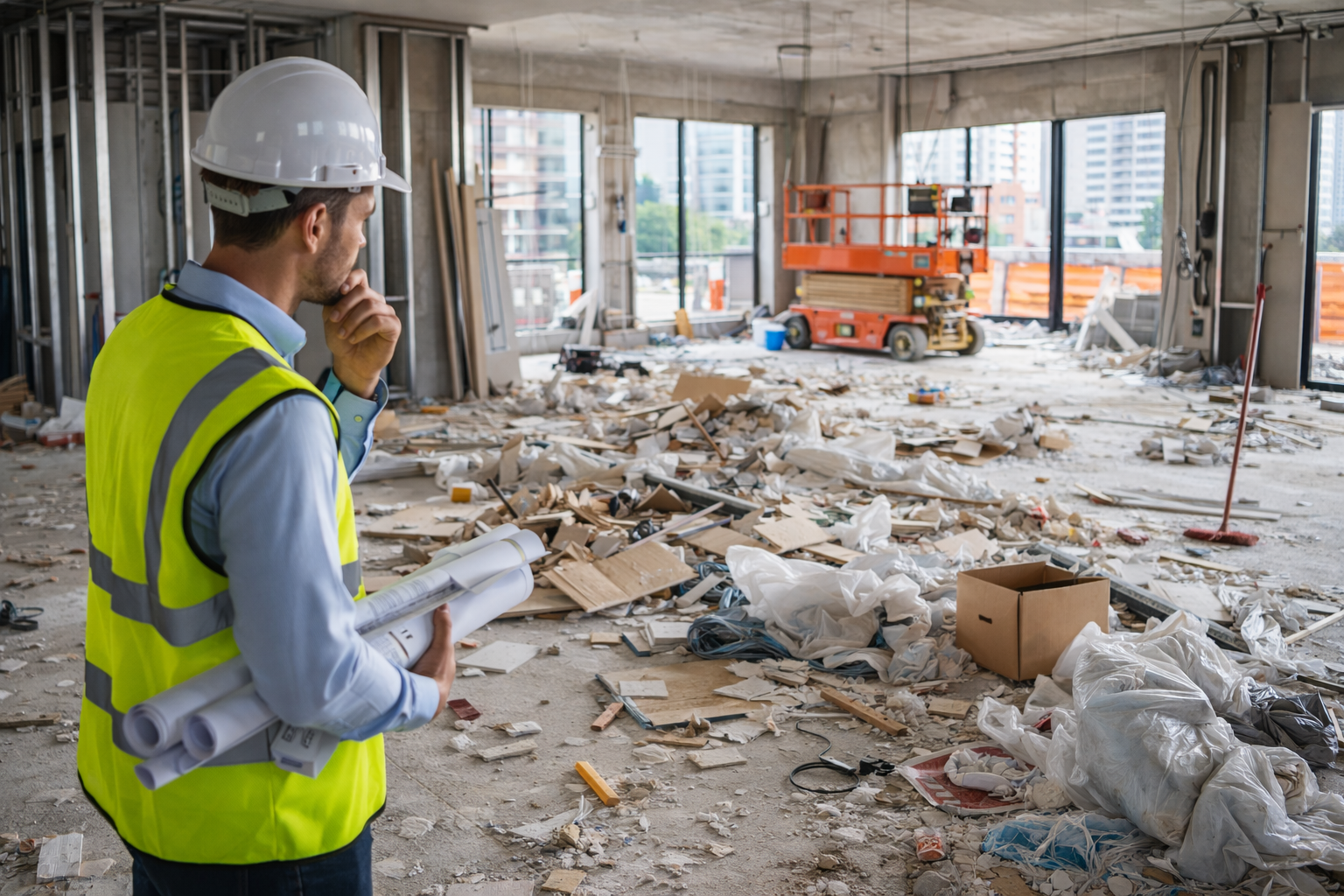
Once major construction activities are finished, crews move into the post construction cleanup stage. This step is essential for delivering a professional, safe, and fully usable site to clients, inspectors, or building occupants. Post-construction cleaning involves removing debris, sweeping surfaces, disposing of remaining materials, and ensuring the site is visually and structurally safe.
What Post-Construction Cleanup Includes
- Removal of all construction debris
- Sweeping, dusting, and washing surfaces
- Clearing walkways, entrances, and staging areas
- Disposing of scrap wood, metal, packaging, and insulation
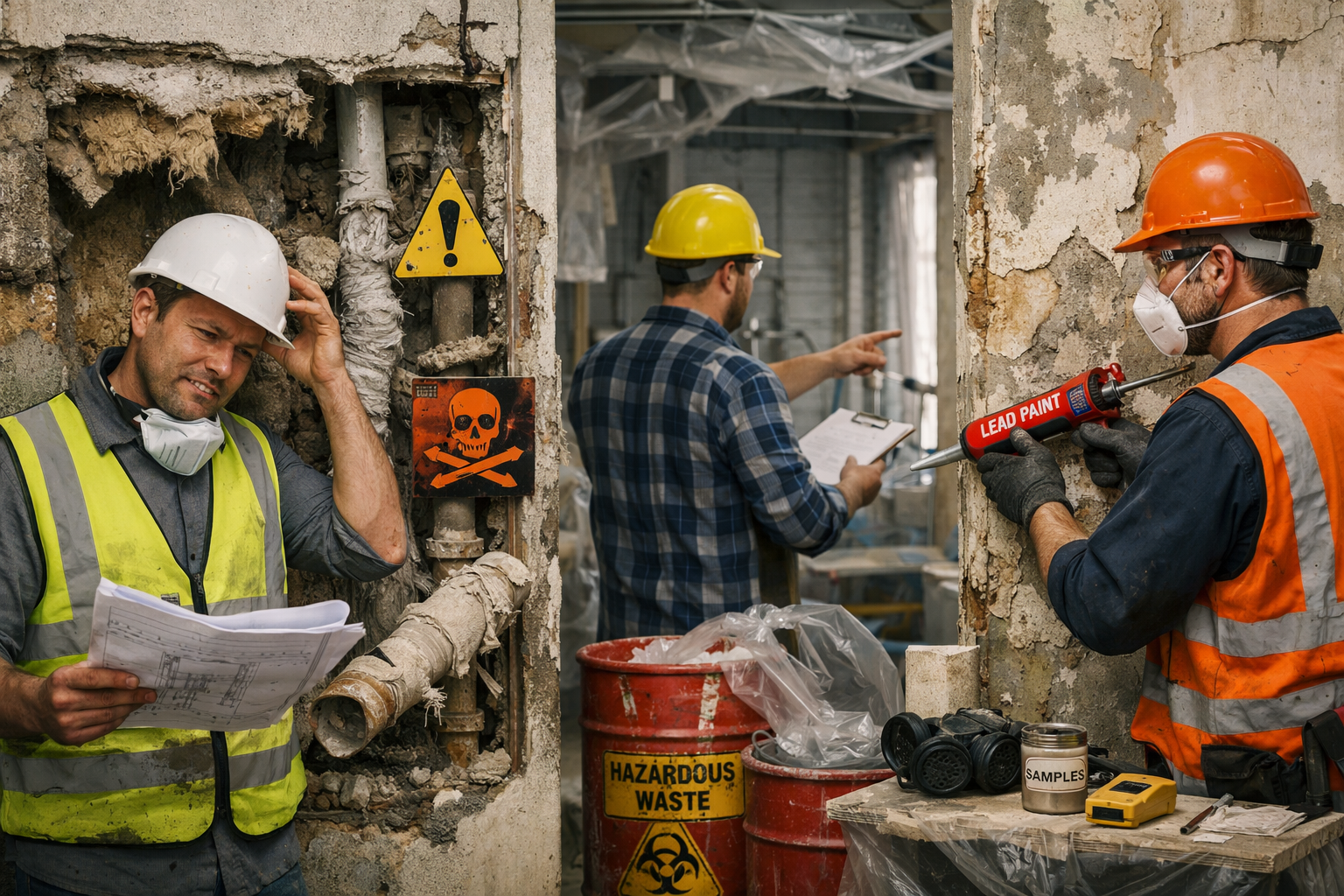
- Removing nails, screws, and hazardous materials
- Final walkthrough to ensure the site meets completion standards
Completing this step thoroughly during year-end cleanup ensures smoother project close-outs and eliminates last-minute scrambles in January.
Construction Waste Management: A Key Factor in Saving Money
Cost control is one of the biggest challenges in construction, and proper construction waste management plays a direct role in reducing unnecessary expenses. Inefficient waste management leads to unplanned trips to disposal sites, equipment misuse, and increased labor hours.
A structured waste management plan allows you to classify debris, schedule disposal properly, and select the right container sizes for your project’s needs.
What Good Waste Management Looks Like
- Sorting debris to reduce landfill volume
- Planning dumpster rentals according to project flow
- Avoiding overfilled or overweight containers
- Reducing contamination of recyclable materials
- Scheduling pickups before holiday closures
Better waste management also helps crews work faster and safer, which becomes critical as year-end deadlines approach.
How to Plan an Effective Year-End Construction Cleanup
Preparing your site for the new year requires a clear plan. This involves evaluating the current state of your jobsite, identifying remaining tasks, and scheduling cleanup services before the holiday rush.
Step 1: Conduct a Year-End Site Assessment
Walk through the jobsite and document areas needing attention:
- Debris accumulation
- Equipment storage issues
- Hazardous waste that must be removed
- Unused or leftover materials
- Pathways blocked by scrap or tools
This assessment creates a baseline for the cleanup plan.
Step 2: Identify the Right Dumpster Size and Placement
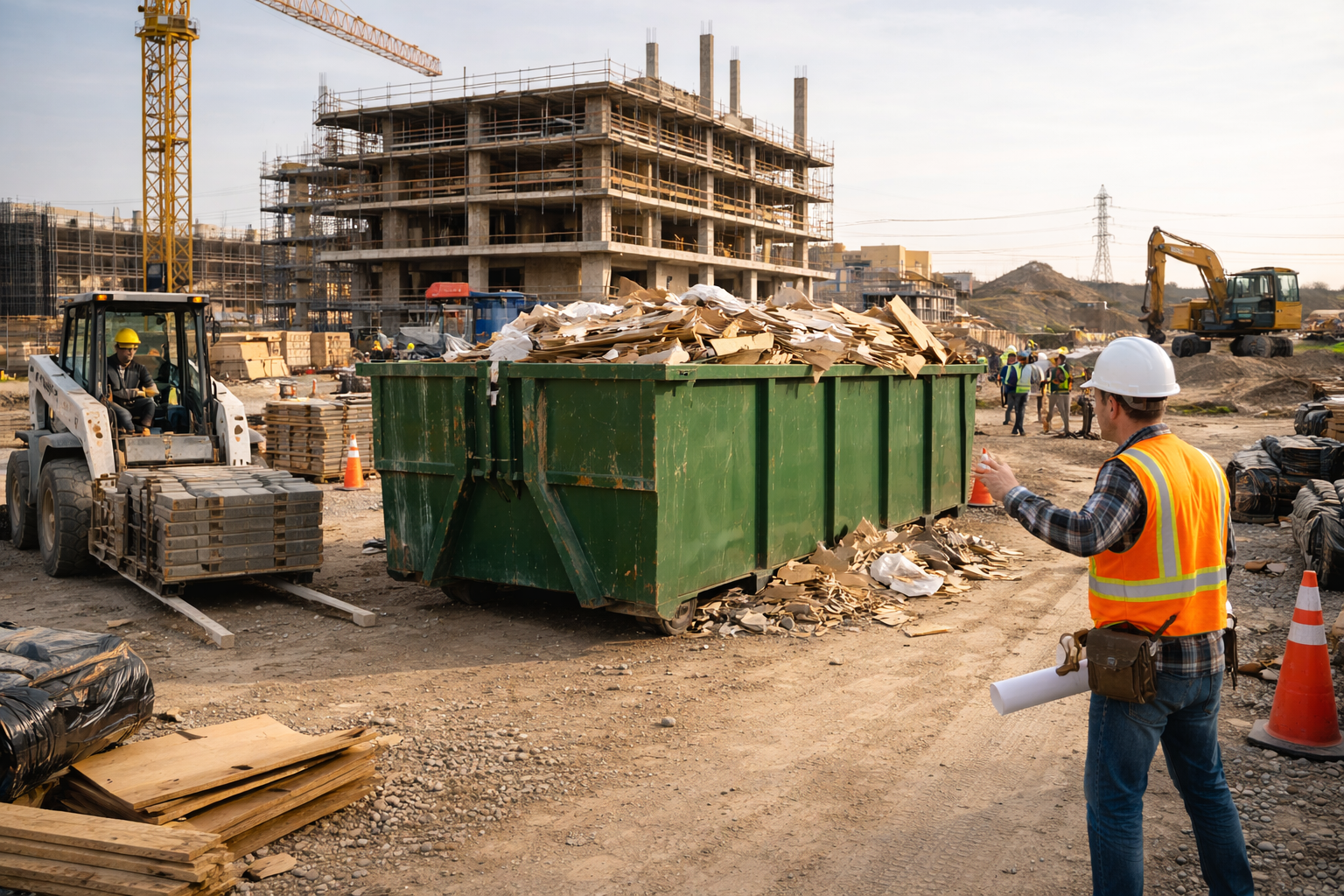
Choosing the proper dumpster size helps crews dispose of waste quickly and efficiently. Make sure the dumpster is positioned in a convenient, accessible location to speed up debris removal.
Step 3: Coordinate Waste Removal in Stages
Instead of waiting until the very end, break cleanup into phases:
- Early-stage clearing
- Mid-project debris removal
- Final year-end cleanup
Phased disposal prevents overwhelming the crew and allows for steady progress.
Step 4: Secure Cleanup Services Before the Seasonal Rush
December brings increased demand for waste removal and dumpster rentals. Booking early ensures availability and prevents delays.
Areas Commonly Overlooked During Year-End Cleanup
Even with efficient planning, certain parts of construction sites are frequently missed during cleanup. Paying attention to these areas helps you avoid hazards and ensure a more complete cleanup.
Overlooked Areas Include:
- Under scaffolding
- Hidden corners behind equipment
- Roofing debris leftover from winter prep
- Scrap and packaging under staging structures
- Gutters, drains, and outdoor walkways
- Storage rooms filled with unused materials
A clean site is safer, easier to navigate, and more presentable for clients and inspectors.
Labor Cost Savings Through Strategic Cleanup
A thorough year-end cleanup reduces labor costs in several ways. Eliminating clutter minimizes the time spent searching for tools, navigating blocked areas, and moving debris manually.
How Cleanup Lowers Labor Costs
- Reduces unnecessary overtime
- Helps teams work more efficiently
- Minimizes time lost to safety incidents
- Prevents rework caused by overlooked debris
- Helps subcontractors complete their portions faster
A streamlined jobsite keeps your crew focused, productive, and safe.
Enhancing Safety with Year-End Cleanup
Safety is one of the most important reasons to complete a thorough cleanup before the year ends. Construction sites naturally accumulate hazards as projects progress, and a deep cleanup ensures these risks are addressed.
Safety Benefits Include:
- Fewer tripping hazards
- Reduced fire risks
- Better visibility of work zones
- Clear evacuation paths
- Proper removal of hazardous materials
- Fewer injuries due to clutter
A safer jobsite means fewer delays, fewer claims, and a more efficient transition into the new year.
Environmental Responsibility in Construction Waste Disposal
Year-end cleanup is a great opportunity to practice environmentally responsible waste disposal. By sorting recyclable materials and minimizing landfill waste, construction companies contribute to sustainability goals and improve cost efficiency.
Sustainable Cleanup Practices Include:
- Recycling metal, concrete, cardboard, and wood
- Separating hazardous waste properly
- Reducing landfill contributions
- Choosing eco-friendly disposal services
- Reusing materials when possible
Sustainable cleanup benefits both the environment and your long-term budget.
Conclusion
A well-planned year-end cleanup is one of the most valuable steps you can take to reduce costs, improve safety, and prepare your jobsite for the year ahead. By prioritizing debris removal, strategic waste management, and efficient cleanup practices, construction teams can save time, prevent delays, and start January with a fresh, organized workspace that supports productivity and long-term project success.